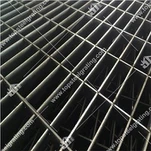
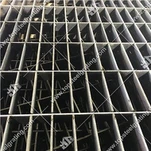
The difference between hot dip galvanizing and cold galvanizing:
1. Hot-dip galvanizing is also called hot-dip galvanizing. He melts the zinc ingot at high temperature, puts some auxiliary materials, and then immerses the metal structural parts into the galvanizing tank, so that a layer of zinc layer is attached to the metal parts. The advantages of hot-dip galvanizing lie in its strong anti-corrosion ability and good adhesion and hardness of the galvanized layer.
"Cold plating" means "electroplating", that is, the zinc salt solution is electrolyzed to coat the plated parts. Generally speaking, no heating is required, and the amount of zinc applied is very small, and it is easy to fall off in a humid environment.
2. Hot-dip galvanizing (galvanizing) For steel grating, the manufacturer strongly recommends hot-dip galvanizing.
Hot-dip galvanizing is a chemical treatment, which is an electrochemical reaction.
Cold galvanizing is a physical treatment, just brush a layer of zinc on the surface, so the zinc layer is easy to fall off. Hot-dip galvanizing is often used in construction.
Continuous hot dip galvanizing process: steel → heating → cooling to galvanizing temperature → galvanizing → cooling
Cold galvanizing is electro-galvanizing, only 10-50g/m2, and its corrosion resistance is much different than that of hot-dip galvanizing. The price of electro-galvanizing is relatively cheap.
Hot-dip galvanizing is the galvanizing of the surface of the steel body under the condition of hot-dip. Require.
3. Process difference
First of all, the difference in the process is: hot-dip galvanizing is to remove oil, pickling, dipping, and drying the workpiece, and then immerse it in the molten zinc solution for a certain period of time, and then put it out.
Cold galvanizing, also known as electro-galvanizing, is to use electrolytic equipment to deoil and pickle the workpiece into a solution of zinc salt, and connect the negative side of the electrolytic equipment; place a zinc plate on the opposite side of the workpiece to connect to the electrolytic equipment. Positive, turn on the power, and use the current to move from the positive and negative orientations to deposit a layer of zinc on the workpiece.
The difference between galvanized finished products: the appearance of hot-dip galvanizing is not as delicate and bright as that of cold-galvanizing, but the thickness of hot-dip galvanizing is dozens of times that of cold galvanizing. The anti-corrosion performance is also dozens of times that of electro-galvanized.
4. Environmental issues
Hot-dip galvanizing emits less pollutants.
The contaminants of hot-dip galvanizing are mainly waste acid from pickling workpieces.
The pollutants of cold galvanizing mainly include waste acid of pickling workpiece, electroplating waste liquid, waste passivation liquid, etc.
The types and quantities of pollutants emitted by cold galvanizing greatly exceed those of hot-dip galvanizing.
Hot dip galvanizing standard: GB/T13912-92
Hot-dip galvanizing: Hot-dip galvanizing is generally carried out after the hemming process is completed. When the thickness of the loaded flat steel is not less than 5mm, the average zinc layer weight after galvanizing is not less than 610 g/square meter; when the thickness of the loaded flat steel is less than 5mm When galvanized, the average zinc layer weight after galvanizing shall not be less than 460 g/m2, and the quality and requirements after galvanizing shall comply with the provisions of GB/T13912.
https://www.topsteelgrating.com/