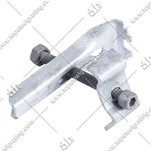
Daily maintenance methods for stainless steel bar gratings are as follows:
1. Cleaning and maintenance
Regular cleaning:
Use tools such as brooms, vacuum cleaners or high-pressure water guns to clean the stainless steel grilles regularly to remove dust, debris and dirt on the surface. The cleaning frequency can be determined according to the use environment and the degree of pollution. It is generally recommended to clean at least once a week.
For dirt that is difficult to clean, you can use a mild detergent or soapy water to clean it. Avoid using strong acids, strong alkalis or corrosive detergents to avoid damaging the stainless steel surface.
Wiping maintenance:
Regularly use a clean soft cloth or sponge to dip a small amount of stainless steel cleaner or care agent, and gently wipe the surface of the stainless steel grille to keep it shiny and clean. When wiping, pay attention to moderate force to avoid scratching the surface.
For areas with oil or stains, you can use a special oil cleaner for cleaning, but be careful to rinse it with clean water in time to avoid detergent residue.
2. Inspection and maintenance
Appearance inspection:
Regularly check the appearance of the stainless steel bar grating to check for scratches, deformation, corrosion, etc. If scratches are found on the surface, stainless steel polish can be used to repair it; if deformation or corrosion is found, it should be replaced or repaired in time.
Check whether the connection parts of the grille are firm. If they are loose or damaged, they should be tightened or replaced in time.
Drainage inspection:
Check the drainage performance of the stainless steel grating to ensure smooth drainage. If the drainage is not smooth, it may be that the grille is blocked or the drainage pipe is blocked, and it should be cleaned in time.
Check the sealing around the grille. If there is a water leak, it should be sealed in time.
3. Protective measures
Avoid collision:
During use, avoid the stainless steel bar grating from being hit by heavy objects or scratched by sharp objects. If heavy objects need to be placed on the grille, they should be distributed as evenly as possible to avoid excessive local force.
For parts that are prone to collision, protective facilities such as guardrails or anti-collision pads can be installed.
Prevent corrosion:
In some corrosive environments, such as the seaside and chemical plants, corresponding anti-corrosion measures should be taken, such as applying anti-corrosion paint and using corrosion-resistant stainless steel materials.
Avoid contact between stainless steel grating and strong acid, strong alkali or corrosive substances. If contact is made accidentally, rinse with clean water in time.
4. Regular maintenance
Professional maintenance:
Ask professionals to perform regular maintenance and upkeep on stainless steel grating, such as checking whether the welding parts are firm and whether there is rust on the surface. Professionals can perform repairs and treatments according to actual conditions to ensure the safety and stability of the grating.
For large stainless steel grating facilities, such as bridges and platforms, a detailed maintenance plan should be formulated for regular inspection and maintenance.
Record maintenance:
Establish a maintenance record for stainless steel grating, recording the time, content and results of each maintenance. The maintenance record can provide a reference for future maintenance work, and also help to find problems in time and take measures.
The daily maintenance of stainless steel grating requires regular cleaning, inspection and protection to ensure its beautiful appearance, stable performance and long service life.
If you want to learn about the daily maintenance methods of stainless steel grating, welcome to follow www.topsteelgrating.com!